Opinion
US-led protectionist policies are feeding through to increased localisation of payment schemes
Barry Levett
CEO
This month, I decided to take a closer look at the trend for greater localisation of payment schemes across many parts of the world as US protectionist policies gather pace.
You may remember from my blog nearly a year ago on a wide range of governments' National Payments Visions (NPVs), that many countries are now viewing their payment infrastructure as a strategic asset. The rising 'push and pull' between maintaining national sovereignty and providing consumer convenience has led to the emergence of 'multi-polar payments' in which numerous local and regional rails now coexist alongside global ones.
Impact of US-led protectionism
This adoption of regional and national domestic payment schemes is now accelerating as US protectionist policies come through thick and fast. Trump's use of trade tariffs, the US government's forced sale of TikTok, blocking of some Chinese products from sale in the US, and this month's intervention in Venezuela, have all fed into an increasing desire by governments and trade bodies for greater independence, extending to payments infrastructure.
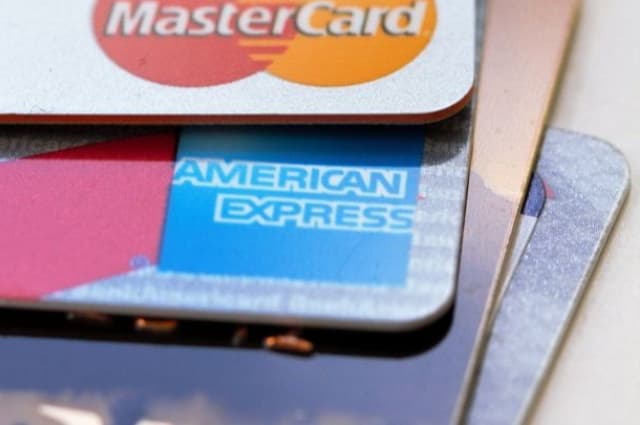
This has inevitably led to countries' desire to lower dependencies on the major global payment players — chief among them, of course, are the top three US card issuers and global payment networks of VISA, Mastercard and American Express.
This focus on greater local and regional rails has already fed through to an increasing demand here at Mypinpad for the building and integrating of local kernels for processing payments through national and regional schemes. This is not new of course, with many country-specific switches being developed over the last few years using commercially available systems such as Gemalto's PURE or proprietary EMV-based technologies, and that is just on card rails. Some countries are also looking at local QR-based schemes and Central Bank Digital Currencies (CBDCs) too.
The risk associated with increased localisation of payment processing is not a technology risk; or indeed a standards or certification risk, because the bodies setting those standards at an international level, such as PCI, are seen as fully independent. The underpinning technologies such as public key crypto or standards such as EMV are already global and well respected as tried-and-tested solutions. Local governments can take existing, mature standards and technologies and approve them for use in their own local schemes, and that is exactly what they are doing.
So, if the risk is not a technology one, then what type of risk is it? In short, the risk is that the fragmentation of payments systems leads to a less integrated and co-operative economic and political environment. Quite simply, consumers and businesses benefit from payment systems that are not just open, but cross-border too.
Rise of localisation of payment processing
Let's take a quick look around the world at the growth of localised processing of payments: in India, the RuPay card scheme and the Unified Payments Interface (UPI) have dramatically reduced India's dependence on foreign networks. As of early 2026, UPI continues to be a global leader in real-time, account-to-account (A2A) payments, offering features like 'UPI Circle' to expand financial inclusion.
Brazil has its own instant payment system called PIX which has become the dominant method for e-commerce, frequently outnumbering credit card transactions. Brazil's domestic card scheme Elo also maintains a strong presence as a local alternative. Both UPI and PIX often offer near-zero transaction costs for users and lower merchant fees compared to international cards, which has been a primary catalyst for their rapid growth.
Following geopolitical shifts linked to the war in Ukraine, Russia has increased the use of its own card scheme called Mir. Mir has now become the primary domestic payment rail to ensure financial stability independent of Western-based systems across Russia.
China meanwhile has its own state-backed card network. The primary players for payment processing are AliPay, which is China's largest platform with approximately 660 million monthly active users. It is a 'super-app' integrated into Alibaba's e-commerce and daily payments services. WeChat Pay runs a close second to AliPay. WeChat is used by over 935 million users today. It uses the massive WeChat social media ecosystem for seamless QR-code transactions.
Looking across Europe, the payments landscape there too has strived to increase resilience through promotion of new regional payment rails. A2A payments, instant transactions, and innovative systems are gaining ground, driven by initiatives like WERO and EuroPA that are making pan-European payments infrastructure a reality. The vision across the EU is that merchants and platforms must offer choice and flexibility for their customers. Increasingly, this will be about the ability to switch easily between cards, A2A, wallets and tokens.
Across the EU this year, look out for the impact of the third Payment Services Directive (PSD3) and the Payment Services Regulation (PSR) as these two documents capture Europe's direction of travel towards a unified and competitive payments market. PSD3 is about creating a mature open banking ecosystem. It encourages innovation, better authentication and a level playing field for all industry players. As these proposals advance in 2026, payment providers will need to adapt to tougher authentication rules, greater transparency, and improved data access for third-party providers. PSD3 aims to deliver faster, safer and more user-friendly digital payments across Europe.
To give one example which illustrates the growth of domestic debit card schemes, Girocard, Germany's premier debit card scheme processed 7.9 billion transactions in 2024 — a 5.6 per cent increase from 2023. According to December 2025's Bundesbank monthly report on payments in Germany, national card networks such as Girocard are benefitting from an increasing "focus on European sovereignty, operational resilience, and competitiveness". From the perspective of retailers, Girocard is also the least expensive cashless payment method. In 2025, payment costs to merchants averaged just under one per cent of turnover. The costs of accepting cards from the international card schemes were significantly higher. Girocard is now accepted by 73 per cent of the surveyed retailers. Only around half accepted Visa and Mastercard debit cards and credit cards.
Meanwhile, domestic debit schemes have achieved the highest acceptance in the Middle East and Africa regions, reaching approximately 88 per cent of outlets by 2025. Governments in Gulf markets are actively encouraging local card schemes as part of a broader move toward digital-first ecosystems.
CBDC usage accelerating
Most national payments vision strategies are grappling with the concept of creating Central Bank Digital Currencies (CBDCs). Since the last time I covered CBDCs a year ago, the first four countries have launched their own CBDC. CBDCs have been issued and are in wide circulation in Jamaica, Zimbabwe, Nigeria and the Bahamas.
Larger countries and regions actively piloting them include Brazil, the Eastern Caribbean, China (Digital Yuan), Japan, the UK (Digital Pound), and the European Union (Digital Euro). They are being tested for cross-border transactions and other financial applications.
Essentially, a wholesale CBDC is a digital form of central bank money designed for use by financial institutions for interbank payments and securities transactions. They facilitate large-scale, low-frequency transactions between financial entities. Although CBDCs are not a technological novelty, they are seen as a way to control money supply, payment rails, and data flows in an increasingly digital economy.
What seems clear is that the acceleration in piloting and launching of CBDCs in just one year may well have been stimulated by a desire by governments to be more resilient. So, as geopolitical tensions rise, stimulated further by US-led protectionist policies, nations and regional blocks inevitably look to protect their interests more vociferously — whether that be by increasing expenditure on defence; or by protecting and enhancing their own ability to keep trading profitably within as well as beyond their borders.
Localisation of rails is then part of a trend for governments to want to move away from over-reliance on others. Seeking to lower dependence on the top three US-based global payment networks of VISA, Mastercard and American Express makes sense in this context. And fortunately, the already mature payments technology ecosystem and standards infrastructure make that localisation, and the realisation of country-specific multi-polar payments vision, a relatively painless and even cost-effective process.
In conclusion, this trend is in motion and looks like it will continue. This is fine if localisation does not mean isolation and that adoption of international technologies and standards are the norm. We and I hope all industry participants continue to work with countries and local providers to adopt the same technologies and standards even while localising.
Talk to Us
Ready to explore what Mypinpad can do for you?
Certified. Independent. Deployed across 28 countries. Let's talk about your use case.
Get in Touch